Circuit design at the speed of thought
Not software. Describe the board — the schematic draws itself, parts place themselves, copper routes itself. You approve, verify, and manufacture.
Words in
Describe
Type the board like you'd brief an engineer — parts, functions, constraints. The agent plans first and waits for your yes; nothing moves without approval.
- Float regulator + bulk caps for pack
- Recompile and verify zero overlaps
- Frame the measured positions
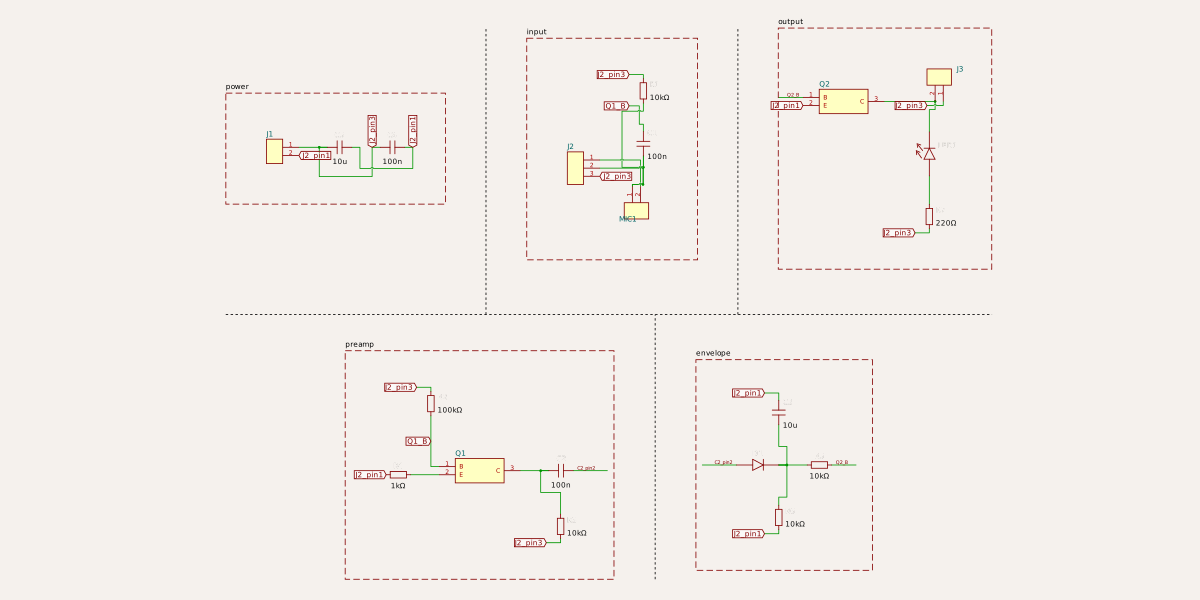
Schematic draws itself
tscircuit's layout engine places symbols and draws wires from your zones. No coordinates, no dragging — sections in, readable sheet out.
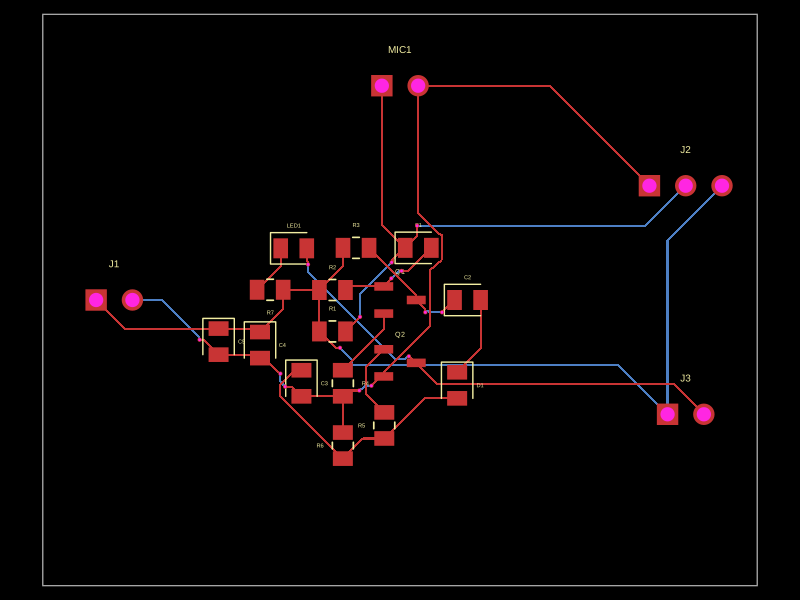
PCB places and routes
The pack solver fits every footprint; the autorouter draws copper for every net it can reach. Overlaps, clearance, and unconnected ports are measured live.
It stands up
The same circuit data renders in 3D instantly. Rotate it, check clearances against the enclosure in your head, keep going.

Factory-ready
Gerbers, drill, BOM with real JLCPCB part numbers, pick-and-place, a full KiCad project, shareable SVGs. Leaves here manufacturable.
To those who ship hardware
Boards were never meant to be drawn twice — once as an idea, once as a thousand mouse clicks.
It begins with intent: what it does, where it flies, what it must survive. Then comes the translation tax — symbols, footprints, copper, clearances — hours of it, error-prone all the way down.
We built fluxboard for the way the work actually happens: you state intent and approve plans, deterministic engines do the placing and routing, and every claim is measured — nets drawn, errors counted, parts orderable.
Describe.Approve.Manufacture.
Your keys, your bill
No credits, no per-click meter. Bring any provider key — the bench runs on it, and you pay them directly.
Bench
- Full studio + agent
- Unlimited boards
- Gerbers, BOM, KiCad, SVG
- Your keys stay local
Studio
- Everything in Bench
- Team boards + shared threads
- Priority support
- New engines first
Enterprise
- Self-hosted bench
- SSO + audit trail
- Your cloud, your keys
- SLA + security review